3D Website
Immersive Experience
Creative Direction
3D Environment
Spatial Design
Responsive Layout
Real-Time Rendering
Interactive Navigation
Visual Storytelling
Overview
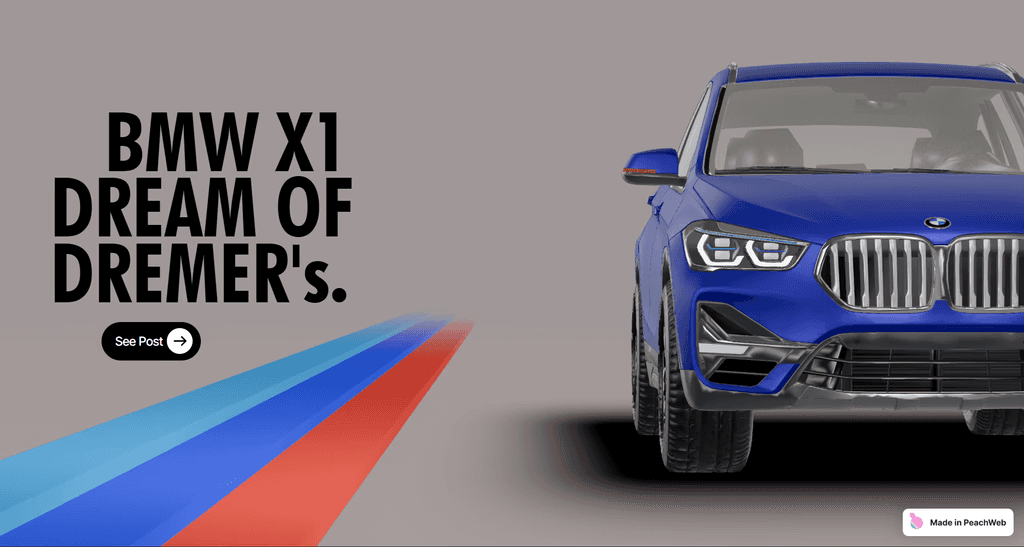
3D Website is an experimental web experience that explores how websites can move beyond flat interfaces into immersive, three-dimensional environments. Rather than presenting information through traditional layouts, the project introduces a navigable digital space where users interact with content from multiple perspectives.
The project was built to investigate how spatial design, real-time rendering, and interactive storytelling can create richer digital experiences while maintaining accessibility through the browser. It represents an exploration into the future of web interfaces, where websites become environments instead of pages.
Problem
Most websites follow predictable layouts that have remained largely unchanged for years. While these patterns are familiar and effective, they often limit creativity and reduce opportunities for memorable interactions.
As browsers and graphics technologies continue to improve, there is increasing potential to rethink how information is presented online. The challenge was finding a balance between visual immersion and practical usability without overwhelming visitors.
Solution
The project replaces conventional page-based navigation with a spatial browsing experience. Instead of moving vertically through content, users explore an interactive environment where information is presented as part of the surrounding digital space.
Carefully designed layouts, environmental composition, and smooth navigation work together to create an experience that feels engaging while remaining intuitive. The focus is not only on visual quality but also on making three-dimensional interaction feel natural inside a web browser.
User Experience
Visitors are introduced to a visually immersive environment where movement, perspective, and interaction become part of the storytelling process. Every section is designed to encourage exploration rather than passive scrolling.
Navigation emphasizes curiosity and discovery, allowing users to experience content through movement instead of static transitions. Responsive behavior ensures that the experience remains accessible across different screen sizes while preserving the core concept of spatial interaction.
The overall interface demonstrates how modern web experiences can become more engaging without sacrificing clarity.
Architecture & Development
The project combines Blender for creating three-dimensional assets, PeachWeb for building the immersive environment, and Figma for interface planning and visual design.
The development process focused on optimizing assets for web delivery while maintaining visual quality and smooth interaction. Careful consideration was given to scene organization, object optimization, navigation flow, and responsive presentation to ensure consistent performance across different devices.
Rather than treating 3D as decoration, the architecture integrates spatial elements directly into the browsing experience, making them part of the interaction model itself.
Challenges & Iterations
Designing an immersive website required balancing visual ambition with technical limitations. Three-dimensional scenes can quickly become resource-intensive, making optimization a critical part of the development process.
Another challenge involved creating navigation that felt intuitive despite departing from traditional web conventions. Multiple iterations refined movement, interaction feedback, and content placement to ensure users remained oriented while exploring the environment.
Performance optimization, scene composition, and interaction design were continuously refined to create an experience that feels both visually rich and technically efficient.
Results & Impact
3D Website demonstrates how immersive environments can transform ordinary web experiences into engaging digital spaces. The project highlights the potential of spatial interfaces to improve storytelling, encourage exploration, and create stronger emotional connections with visitors.
It showcases skills in 3D design, environment creation, interaction planning, frontend experimentation, and modern web presentation while exploring alternative approaches to digital experiences.
More importantly, it reinforces the idea that websites can become places to explore rather than simply pages to read.
What I Learned
This project expanded my understanding of spatial web design, environment composition, interactive navigation, asset optimization, browser rendering, and user experience within immersive digital spaces.
It also strengthened my ability to combine design thinking with emerging web technologies, showing how creativity and technical implementation can work together to redefine traditional website experiences.
Future Roadmap
Future iterations will introduce richer interactive environments, animated scene transitions, dynamic lighting, improved accessibility, multiplayer exploration, integrated storytelling, advanced environmental effects, AI-assisted navigation, and deeper integration with modern 3D web technologies.
The long-term vision is to continue exploring how immersive environments can become practical tools for storytelling, branding, education, and digital experiences while remaining fast, accessible, and enjoyable to use.
Note :
This project is an independent creative experiment exploring spatial web design and immersive user experiences. It demonstrates interactive presentation techniques using modern 3D web technologies and serves as part of my portfolio and ongoing research.
View Live App
Live Website